Rotate image (square matrix) by 90 deg
Tue, 06 May 2025

Given a Binary tree (not BST), write code to find the minimum and maximum value in the tree.
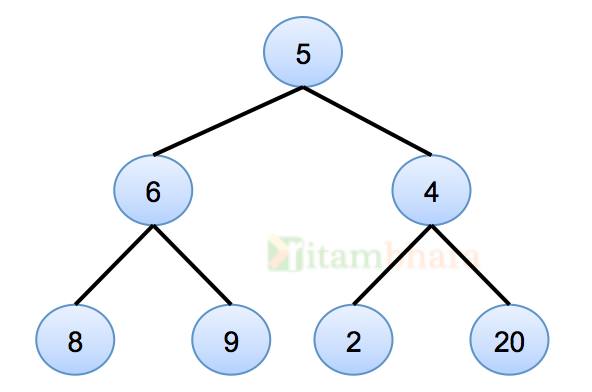
For example, if the tree is as shown in the above picture, then the output should be:
Minimum: 2
Maximum: 20
Solution:
It is a very simple problem, where we traverse the entire tree and keep track of the minimum value found till now. For each node we will compare it against the minimum till now. If the value at node is less than that then we will update the minimum with current node. Tree can be traversed in any order (pre, post, etc.). Below is the complete program (with helper functions) for same:
Code
#include <iostream>
using namespace std;
struct Node{
    Node* lptr;
    Node* rptr;
    int data;
    Node(int value):lptr(NULL),rptr(NULL),data(value){}
};
Node* findMinimum(Node* r)
{
    if(r==NULL) { return NULL; }
    // Leaf Node. Hence it is the minimum.
    if(r->lptr == NULL && r->rptr == NULL) { return r; }
    Node* temp1 = findMinimum(r->lptr);
    Node* temp2 = findMinimum(r->rptr);
    Node* minNode = r;
    if(temp1 != NULL && temp1->data < minNode->data)
        minNode = temp1;
    if(temp2 != NULL && temp2->data < minNode->data)
        minNode = temp2;
    return minNode;
}
Node* findMaximum(Node* r)
{
    if(r==NULL) { return NULL; }
    // Leaf Node. Hence it is the minimum.
    if(r->lptr == NULL && r->rptr == NULL) { return r; }
    Node* temp1 = findMaximum(r->lptr);
    Node* temp2 = findMaximum(r->rptr);
    Node* maxNode = r;
    if(temp1 != NULL && temp1->data > maxNode->data)
        maxNode = temp1;
    if(temp2 != NULL && temp2->data > maxNode->data)
        maxNode = temp2;
    return maxNode;
}
int main(int argc, const char * argv[]) {
    // insert code here...
    Node* r = new Node(5);
    r->lptr = new Node(6);
    r->lptr->lptr = new Node(8);
    r->lptr->rptr = new Node(9);
    r->rptr = new Node(4);
    r->rptr->rptr = new Node(20);
    r->rptr->lptr = new Node(2);
    cout<<"Minimum :"<<findMinimum(r)->data<<endl;
    cout<<"Maximum :"<<findMaximum(r)->data<<endl;
    return 0;
}
Tue, 06 May 2025
Tue, 06 May 2025
Tue, 06 May 2025

Prepare to ace your coding and system design interviews with our comprehensive resources and expert guidance! Ritambhara Technologies offers a curated collection of coding challenges, system design tutorials, mock interviews, and behavioral tips to help you stand out. Whether you're targeting FAANG companies, startups, or tech giants, we provide tailored strategies and in-depth solutions to boost your confidence and sharpen your skills. Explore, practice, and succeed!
Leave a comment